School Hearing Screening
To Help Minimise Hearing Problems in Children
School Hearing Screenings
By doing hearing screenings in schools, we aim to detect and minimise hearing problems in children through accurate and early identification which allows hearing impaired children to get the help they need to live a normal, happy life and progress appropriately in school.
What is a School Hearing Screening?
As it is a screening procedure, it lacks the accuracy of a full diagnostic hearing assessment but allows many children to be seen in a short period of time at a reasonable cost.
Why is it necessary to screen children’s hearing?
Research shows that for every normal hearing child failing a grade, ten children with a minimal hearing loss fail a grade. These concerns are not limited to the junior primary or foundation phase but are just as relevant in the senior primary and high school phases. Therefore, early identification is crucial.

“In early childhood, our sense of hearing plays a crucial role, providing the basis for speech and communication skills.”
School Hearing Screening – More FAQ
What does a Hearing Screening include?
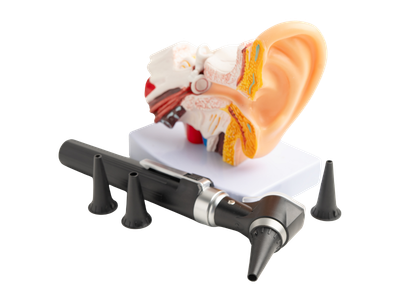
It is first established whether there is any matter such as wax or debris in the ear canal which can affect the hearing levels.
Following this, the middle ear system is assessed to exclude a treatable condition such as a middle ear infection.
Finally, the hearing levels are assessed to establish whether hearing falls within the acceptable range or not. As with most hearing assessments, the test results depend on the demeanour and health of the child AT THE TIME OF TESTING.
What do the results mean, and what’s next?
If your child did not pass the hearing screening, it means that at the time of testing there were factors that raised concerns for the audiologist, indicating the need for further and more extensive hearing assessment. This may be the presence of wax in the ear canals, an ear infection, poor responses to the test stimuli, a child who found it difficult to respond appropriately in the assessment situation or a combination of these factors.
If your child did not pass his/her hearing screening at school, it is best to make an appointment for a proper hearing assessment at a professional audiologist. Having the assessment done sooner rather than later may prevent the condition from worsening and will allow your child to benefit more from their school experience.